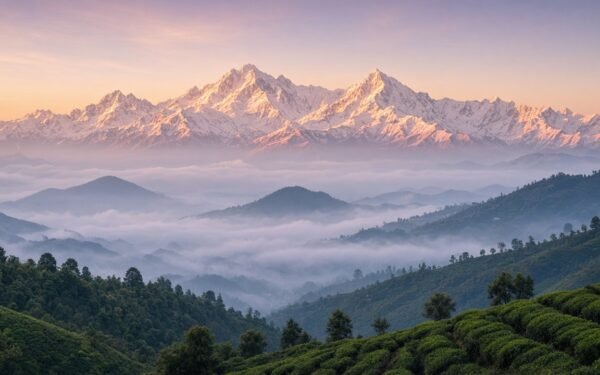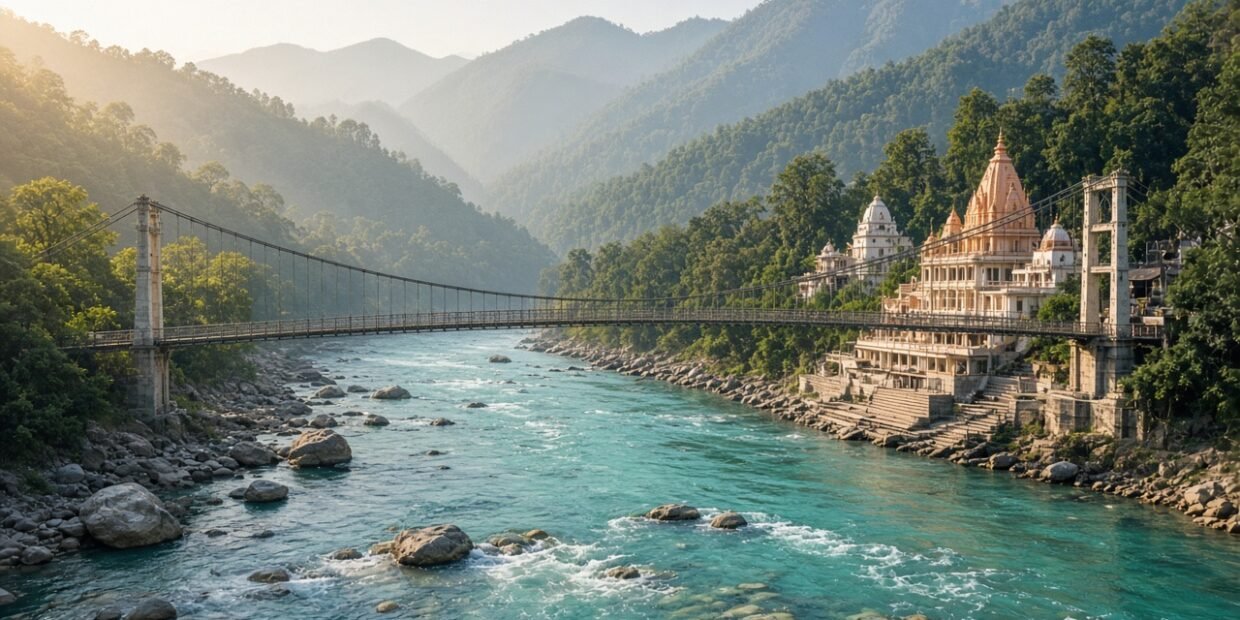
A rishikesh haridwar trip combines two very different sides of the Ganga in one short holiday. Haridwar is an ancient pilgrimage city where the river leaves the mountains, famous for its evening aarti at Har Ki Pauri. Rishikesh, about an hour upstream, is the yoga capital of the world, with ashrams, cafés, suspension bridges and white-water rafting.
This guide covers when to go, how to reach, getting around, a three-day plan, stays by budget, food, costs, etiquette and the mistakes first-timers make.
Table of Contents
Haridwar and Rishikesh: two towns, one river
Haridwar is busy and devotional, centred on its ghats, temples and markets. It is one of the four sites of the Kumbh Mela. Rishikesh is greener and calmer, stretched along both banks of the river with forested hills behind.
Most travellers base themselves in Rishikesh and visit Haridwar for an evening. That approach keeps your rishikesh haridwar trip relaxed and gives you quieter mornings by the river.
Best time for a rishikesh haridwar trip
October to April is the most pleasant time, and also the main rafting window along with the early summer months. March hosts the International Yoga Festival in Rishikesh, which draws visitors from around the world.
May and June are hot but rafting is popular. The monsoon (roughly July to September) brings heavy rain, swollen rivers and landslide risk in the hills; rafting is generally suspended in this period. During Kanwar Yatra in the Shravan month, Haridwar is extremely crowded and road traffic is restricted, so plan around it.
How to reach Rishikesh and Haridwar
By air
The nearest airport is Jolly Grant Airport in Dehradun, roughly 20 to 25 km from Rishikesh and a little farther from Haridwar. Taxis are available outside the terminal.
By rail
Haridwar Junction has excellent connections, including fast trains from Delhi. Rishikesh has its own Yog Nagari Rishikesh station with a growing list of trains. Our guide to Indian trains helps you choose between options like Shatabdi and Vande Bharat.
By road
Buses and taxis run from Delhi via highways; travel time depends heavily on traffic. Between Haridwar and Rishikesh, take a taxi, bus or shared auto.
Getting around
In Rishikesh, walking is easiest around Ram Jhula, Laxman Jhula and Tapovan, though the lanes are hilly. Shared autos and e-rickshaws cover longer stretches. The old Laxman Jhula bridge has been closed for safety, and newer crossings and ferries help you move between the banks.
In Haridwar, cycle-rickshaws and autos are common near the ghats, and walking is best around Har Ki Pauri. Expect road closures and diversions on festival days.
Top experiences on a rishikesh haridwar trip
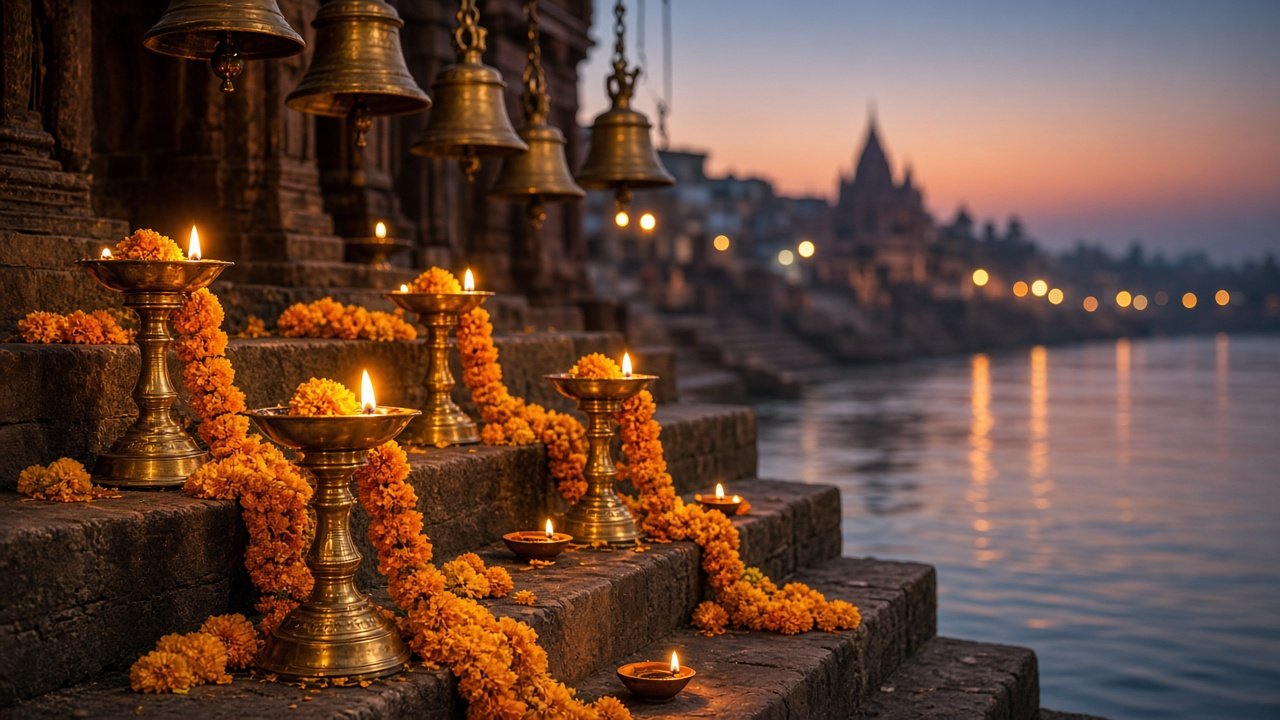
- Ganga Aarti at Har Ki Pauri: Haridwar’s famous evening aarti, with lamps floating on the river. Arrive early.
- Evening aarti in Rishikesh: quieter ceremonies at Triveni Ghat and Parmarth Niketan.
- Yoga and meditation: drop-in classes are everywhere; longer courses at established ashrams.
- White-water rafting: stretches upstream of Rishikesh, such as from Shivpuri, are popular with beginners.
- Beatles Ashram (Chaurasi Kutia): atmospheric ruins with murals, inside the Rajaji reserve area.
- Neelkanth Mahadev Temple: a forest temple in the hills above Rishikesh.
- Mansa Devi and Chandi Devi temples: hilltop temples in Haridwar, reached by ropeway.
Choosing a yoga class or course
Short drop-in classes are perfect if you just want a taste of yoga. For longer stays, look at established ashrams and schools with clear teacher credentials, published schedules and honest reviews. Ask about class level, language, and whether meals and rooms are included.
Multi-week teacher-training courses are a serious commitment, so speak to past students before paying. The Incredible India Rishikesh page gives useful background on the town’s yoga heritage.
Sample 3-day rishikesh haridwar trip itinerary
Day 1 — Haridwar arrival and aarti
Arrive in Haridwar by train. Visit Mansa Devi by ropeway, walk the market, then watch the evening aarti at Har Ki Pauri. Drive to Rishikesh after dinner, or stay overnight in Haridwar.
Day 2 — Yoga, ashrams and river
Start with a morning yoga class. Explore Ram Jhula, Parmarth Niketan and the Beatles Ashram. In the evening, attend the Triveni Ghat or Parmarth aarti.
Day 3 — Rafting or Neelkanth
Go rafting in season with a licensed operator, or visit Neelkanth Mahadev Temple. Spend the afternoon at a riverside café before leaving.
With more time, extend to Dehradun and Mussoorie, or continue toward the Char Dham route. Remote workers can stay longer; see our workation destinations guide.
Where to stay by budget
- Budget: hostels and guesthouses in Tapovan and around Laxman Jhula.
- Mid-range: riverside hotels and boutique stays near Ram Jhula.
- Premium: wellness resorts and riverside camps upstream.
- Ashrams: simple rooms with fixed schedules for yoga and meditation; book directly.
In Haridwar, stay near Har Ki Pauri if you want to walk to the aarti.
Food to try
Both towns are largely vegetarian, and alcohol and meat are restricted in the main pilgrim areas. Try aloo puri, kachori, chole bhature and lassi in Haridwar. Rishikesh’s cafés serve everything from Garhwali dishes to sattvic thalis, smoothie bowls and Israeli food.
Look for Garhwali specials such as kafuli, chainsoo and mandua roti. For more food ideas, see our Indian street food destinations guide.
Costs and budgeting
Costs on a rishikesh haridwar trip vary by season, stay and activities. Rishikesh is easy on a budget, with plenty of hostels and simple cafés. Rafting prices depend on distance and operator, and yoga courses range from free drop-ins to multi-week paid programmes. Confirm total costs before booking.
Safety and etiquette
- Raft only with licensed operators who provide helmets and life jackets.
- Do not swim in the Ganga outside safe ghats; currents are strong and cold.
- Dress modestly at ghats, temples and ashrams.
- Watch belongings at crowded aarti ceremonies.
- Respect ashram rules on silence, timings and photography.
The Uttarakhand Tourism website lists official events and advisories, and the Haridwar district website carries festival and traffic notices.
Mistakes to avoid
- Visiting during Kanwar Yatra or Kumbh without planning for crowds.
- Booking rafting in the monsoon, when it is usually suspended.
- Trying to see both towns in a single day.
- Expecting alcohol or meat in the main pilgrim zones.
- Ignoring hotel location; traffic between areas can be slow.
With these tips, your rishikesh haridwar trip should feel calm, spiritual and adventurous in the right balance.
FAQ
How many days are enough for a Rishikesh Haridwar trip?
Two to three days is ideal: one evening for the Haridwar aarti and one or two days in Rishikesh for yoga, rafting and ashrams.
What is the best time for river rafting in Rishikesh?
Rafting usually runs from around September or October to June, and is generally suspended during the monsoon months.
Which aarti is better, Haridwar or Rishikesh?
Haridwar’s Har Ki Pauri aarti is grander and busier. Rishikesh’s aartis at Triveni Ghat and Parmarth Niketan are calmer. Many people see both.
What is the nearest airport?
Jolly Grant Airport in Dehradun is the nearest airport for a rishikesh haridwar trip, roughly 20 to 25 km from Rishikesh.
Are Rishikesh and Haridwar safe for solo travellers?
Yes, with normal care. Our solo travel guide for first-timers covers simple habits that help.
Keep exploring with Planning for India
Save this rishikesh haridwar trip guide, and explore our solo travel and workation guides to plan your next Himalayan break with Planning for India.