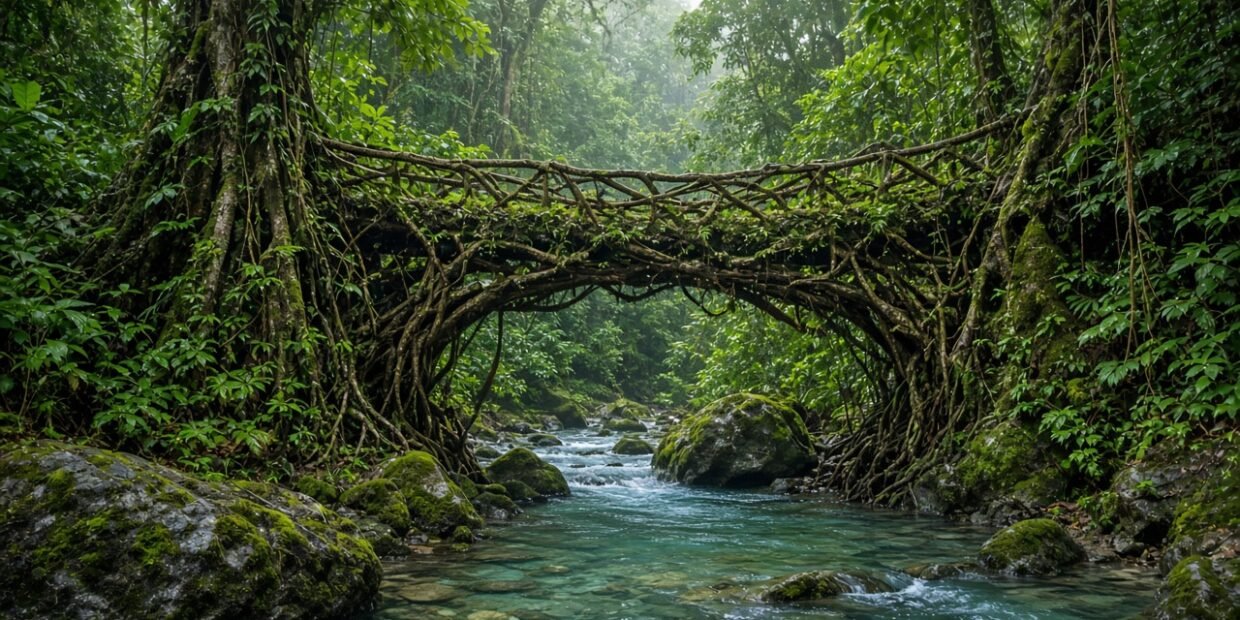
This meghalaya travel guide is for travellers who want waterfalls, clouds, caves and living root bridges in one unforgettable trip. Meghalaya, “the abode of clouds”, sits in Northeast India between Assam and Bangladesh. It has some of the wettest places on Earth, deep green canyons and village bridges grown from the roots of rubber trees.
Below you will find the best time to go, how to reach Shillong, how to get around, a five-day plan, the Nongriat trek, stays by budget, food, costs, etiquette and the mistakes that turn a dream trip into a soggy one.
Table of Contents
Understanding Meghalaya’s regions
Meghalaya has three main hill regions: the Khasi Hills around Shillong and Sohra (Cherrapunji), the Jaintia Hills to the east with Krang Suri falls and Dawki nearby, and the Garo Hills to the west, which are less visited.
First-timers usually stay in Shillong and Sohra, with a day trip to Dawki and Mawlynnong. That is the loop this meghalaya travel guide follows.
Best time to visit Meghalaya
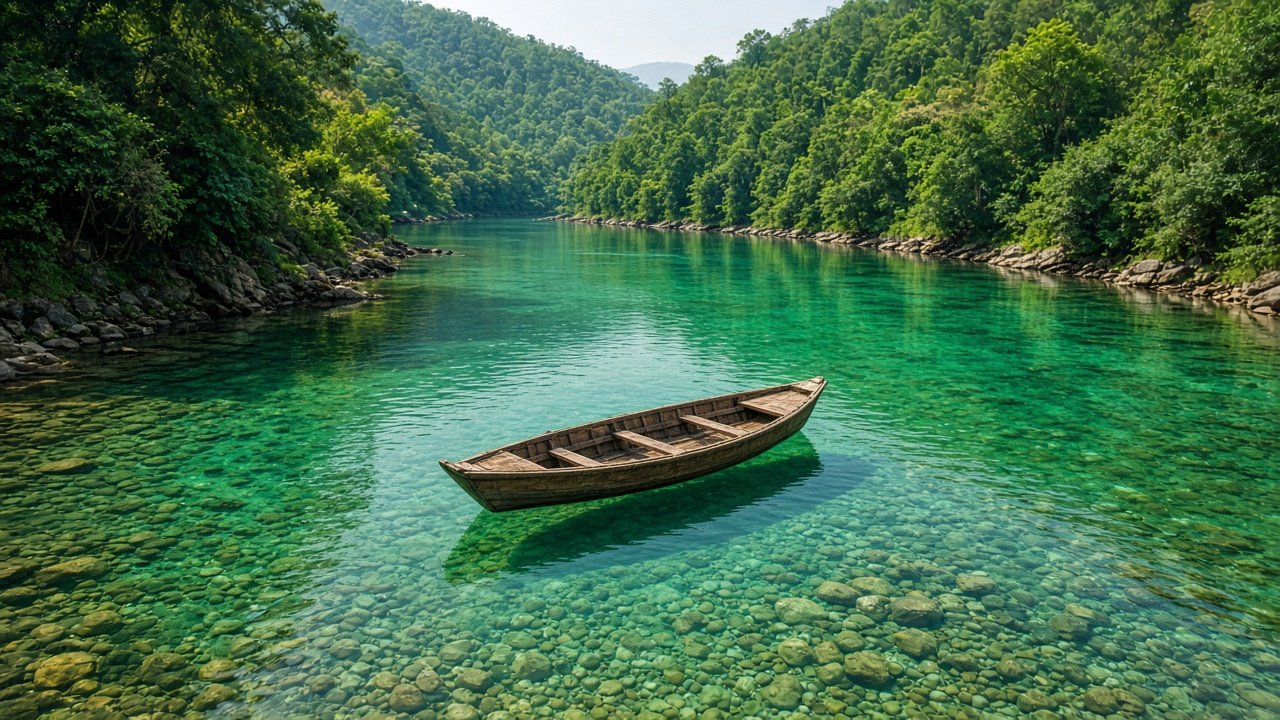
October to April is the most comfortable and reliable season. The sky is clearer, trails are drier, and the Umngot river at Dawki is famously clear from about November to April.
The monsoon (roughly June to September) makes waterfalls roar and the hills glow green, but heavy rain brings slippery trails, landslides and fog. If you go then, keep flexible days. Winter evenings in Shillong can be chilly, so pack layers.
How to reach Shillong
By air
Most visitors fly into Guwahati in Assam, the region’s main airport, and drive about three hours to Shillong. Shillong Airport at Umroi has limited flights; see the AAI Shillong airport page for details.
By rail
Meghalaya has no major passenger rail network for tourists, so Guwahati is the main railhead, with trains from Delhi, Kolkata and other cities. Our guide to trains in India explains classes and booking.
By road
Taxis and shared cabs run from Guwahati to Shillong. Hiring a local taxi with a driver is the best way to cover Sohra, Dawki and Mawlynnong, as public transport to these spots is limited.
Do you need a permit for Meghalaya?
Indian tourists do not need an Inner Line Permit to visit Meghalaya’s main tourist areas, though local rules on visitor registration can change. Foreign nationals do not usually need special permits for the main circuit. Check current advisories on the Meghalaya Tourism website and the East Khasi Hills district website before travelling.
Top sights in this meghalaya travel guide
- Double-decker living root bridge, Nongriat: a steep trek of thousands of steps down from Tyrna village.
- Nohkalikai Falls: one of India’s tallest plunge waterfalls, near Sohra.
- Mawsmai Cave: a short, lit limestone cave near Sohra.
- Laitlum Canyons: dramatic viewpoints outside Shillong.
- Dawki and Shnongpdeng: the clear Umngot river, boating and riverside camping.
- Mawlynnong: a well-known clean village with a nearby root bridge.
- Krang Suri Falls: turquoise pools in the Jaintia Hills.
The Nongriat root bridge trek
The trek to the double-decker bridge is the highlight of most trips. It starts at Tyrna near Sohra and descends a long staircase into the valley, crossing smaller root bridges and steel suspension bridges along the way. Going down is easy; climbing back up is a real workout.
Start early, carry water and wear shoes with good grip. Many travellers stay overnight in a Nongriat homestay to avoid doing the full return in one day and to visit Rainbow Falls further on.
Sample 5-day meghalaya travel guide itinerary
Day 1 — Guwahati to Shillong
Drive from Guwahati to Shillong, stopping at Umiam Lake. Walk Police Bazaar in the evening.
Day 2 — Shillong to Sohra
Visit Laitlum Canyons, then drive to Sohra. See Nohkalikai Falls and Mawsmai Cave.
Day 3 — Nongriat trek
Trek to the double-decker root bridge and Rainbow Falls. Stay overnight in Nongriat or climb back to Sohra.
Day 4 — Mawlynnong and Dawki
Drive to Mawlynnong and its root bridge, then on to Dawki and Shnongpdeng for boating. Stay near the river or return to Shillong.
Day 5 — Return to Guwahati
Head back to Guwahati for your onward journey, leaving buffer time for traffic.
With more time, add Krang Suri Falls and the Jaintia Hills. For other offbeat mountain trips, see our Spiti Valley guide.
Adding the Jaintia Hills
The Jaintia Hills, east of Shillong, are quieter than the Sohra circuit. Krang Suri Falls has turquoise pools and is best in the dry months. Nartiang has a field of tall monoliths, and Jowai makes a convenient base. Add at least one extra day if you want to include this region in your meghalaya travel guide plan.
Where to stay by budget
- Budget: homestays in Sohra, Nongriat and Mawlynnong, and guesthouses in Shillong.
- Mid-range: boutique hotels in Shillong and resorts near Sohra with valley views.
- Premium: lakeside resorts near Umiam and upmarket hotels in Shillong.
Homestays are a highlight of any meghalaya travel guide itinerary; they connect you with Khasi families and local food.
Food to try in Meghalaya
Khasi food is hearty and pork-forward. Try jadoh (rice cooked with meat), dohneiiong (pork with black sesame), tungrymbai (fermented soybean) and pumaloi (steamed rice cakes). Shillong also has a lively café scene.
Vegetarians should ask clearly, as many dishes contain meat. For more regional food, see our Indian street food destinations.
Costs and budgeting
Costs in this meghalaya travel guide vary with season and transport. The biggest cost is usually a private taxi for sightseeing days. Homestays keep accommodation affordable, and many villages charge small entry or parking fees at viewpoints. ATMs are scarce outside Shillong, so carry cash.
Safety and etiquette
- Wear sturdy shoes; trails and steps are slippery, especially after rain.
- Do not walk off-trail near cliffs and waterfalls.
- Respect village rules and pay community fees where asked.
- Do not litter; many villages take cleanliness very seriously.
- Ask before photographing people and private homes.
Solo travellers will find our solo travel tips helpful for planning.
Mistakes to avoid
- Attempting the Nongriat trek late in the day without a stay booked.
- Visiting Dawki in the monsoon expecting clear water.
- Packing too many sights into one day; roads are slow and winding.
- Relying on card payments outside Shillong.
- Forgetting rain gear, even outside the monsoon.
Keep this meghalaya travel guide handy, and you will enjoy one of India’s most beautiful states at its best.
FAQ
How many days are enough for Meghalaya?
Five days covers Shillong, Sohra, the Nongriat trek, Mawlynnong and Dawki. Add two days for the Jaintia Hills or more relaxed pacing.
Do I need an Inner Line Permit for Meghalaya?
Indian tourists do not need an Inner Line Permit for Meghalaya’s main tourist areas. Check the official tourism website for any updated advisories.
When is the Umngot river at Dawki clearest?
The water is usually clearest from about November to April. During the monsoon, it turns muddy.
How difficult is the double-decker root bridge trek?
It is moderate. The descent is easy, but the climb back up thousands of steps is tiring, so start early and pace yourself.
Is Meghalaya good to visit in the monsoon?
Waterfalls are spectacular, but rain, fog and slippery trails make travel harder. This meghalaya travel guide recommends October to April for first-timers.
Keep exploring with Planning for India
Save this meghalaya travel guide, and explore our Spiti and solo travel guides to plan your next offbeat trip with Planning for India.