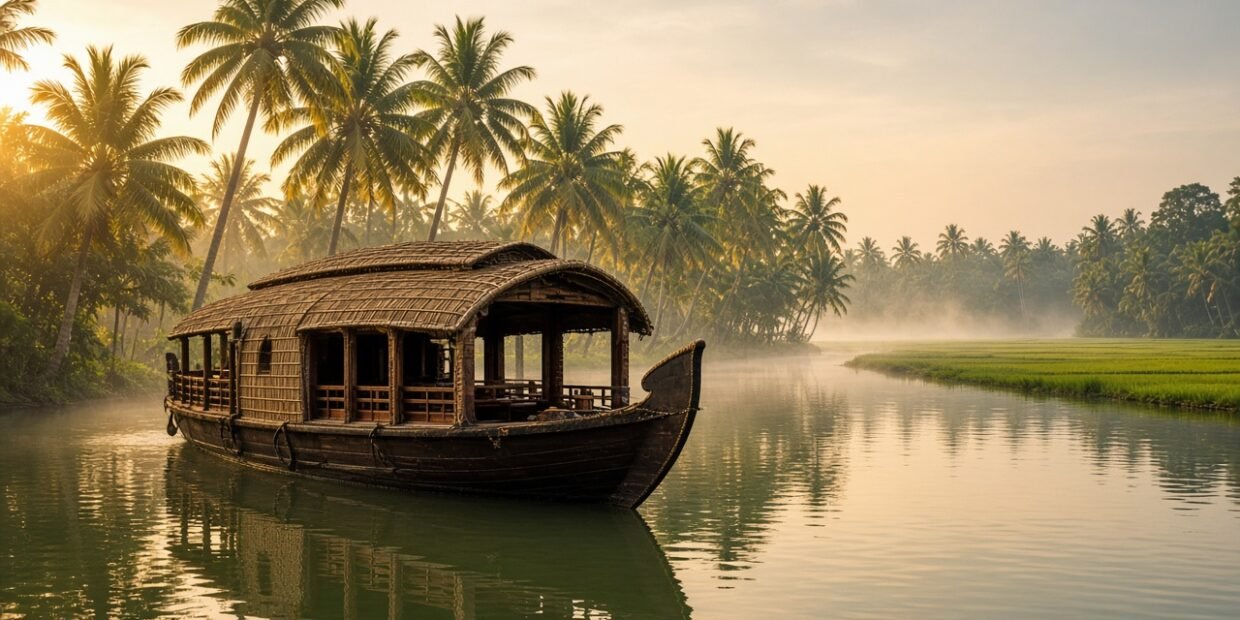
This kerala backwaters travel guide is for travellers who want the slow, green, water-level side of South India without overpaying or rushing. Kerala’s backwaters are a maze of lakes, canals and rivers between Kochi and Kollam, and the classic way to see them is from a wooden houseboat drifting past paddy fields and village jetties.
Below you will find when to go, how to reach Alappuzha (Alleppey) and Kumarakom, how to pick a houseboat, a calm four-day plan, food to order, budget bands, and the mistakes that quietly spoil the trip.
Table of Contents
Why the Kerala backwaters belong on your list
The backwaters are not one lake. They are a long chain of brackish lagoons, the largest being Vembanad Lake, fed by rivers coming down from the Western Ghats. Villages sit on narrow strips of land between canals, and boats are still part of daily life here.
Two bases dominate: Alappuzha, the houseboat hub with the busiest jetty, and Kumarakom, quieter and resort-heavy on the eastern shore of Vembanad. Smaller hubs such as Kollam and Kuttanad villages suit people who want fewer boats around them.
Before booking, cross-check this kerala backwaters travel guide against the official Kerala Tourism backwaters page, which lists routes, approved operators and seasonal notices.
Best time to visit the Kerala backwaters
For most readers of this kerala backwaters travel guide, September to March is the sweet spot. Mornings are pleasant, skies are clearer and humidity is easier to handle. December and January are peak months, so houseboat prices and resort rates climb and the main Alleppey channels get crowded.
The monsoon (roughly June to September) is lush and dramatic, with heavy rain, green paddy and lower prices. It suits travellers who like rain and Ayurveda stays, but some outdoor plans get cancelled. April and May are hot and sticky.
If you want to see a snake-boat race, plan around August, when the Nehru Trophy Boat Race is held on Punnamada Lake near Alappuzha. Check the exact date each year, because hotels fill fast.
How to reach Alleppey and Kumarakom
By air
The closest major airport is Cochin International Airport. Its official CIAL site lists domestic and international connections. From the airport, Alappuzha is roughly a two-hour drive and Kumarakom a little less, depending on traffic. Thiruvananthapuram airport works if you are combining the backwaters with Varkala or Kovalam.
By rail
Alappuzha and Kottayam both have railway stations on the Kerala coastal network, and Ernakulam is the main junction for long-distance trains. Kottayam is the handy station for Kumarakom. Book on IRCTC early in peak season. If you are new to Indian trains, our guide to different trains in India explains classes and booking windows.
By road
Kochi to Alappuzha is a straightforward highway drive, and KSRTC buses run frequently along the coast. Prepaid taxis and app cabs are available from Kochi. Hire a car with a driver if you plan to add Munnar or Thekkady.
Choosing a houseboat in your kerala backwaters travel guide plan
The traditional houseboat, or kettuvallam, was once a rice barge. Today they range from one-bedroom boats for couples to large multi-bedroom boats for families. Most overnight cruises board around noon, cruise through the afternoon, anchor by early evening and return the next morning.
- Day cruise vs overnight: a day cruise covers the main channels; an overnight stay gives you sunset, a quiet night on the water and a misty morning.
- Shared vs private: private boats include meals cooked on board; shared or “sharing” boats are cheaper but less flexible.
- AC timing: many boats run air-conditioning only at night, so confirm the hours before paying.
- Route: ask whether the boat enters narrower village canals or only stays on the wide lake. Big boats cannot enter small canals.
- Approval: prefer boats classified or approved by Kerala Tourism, and read recent reviews for hygiene and safety gear.
Prices change sharply by season, boat size, AC and meals, and festive weeks carry surcharges. Compare three or four quotes and get the inclusions in writing rather than relying on a single headline rate.
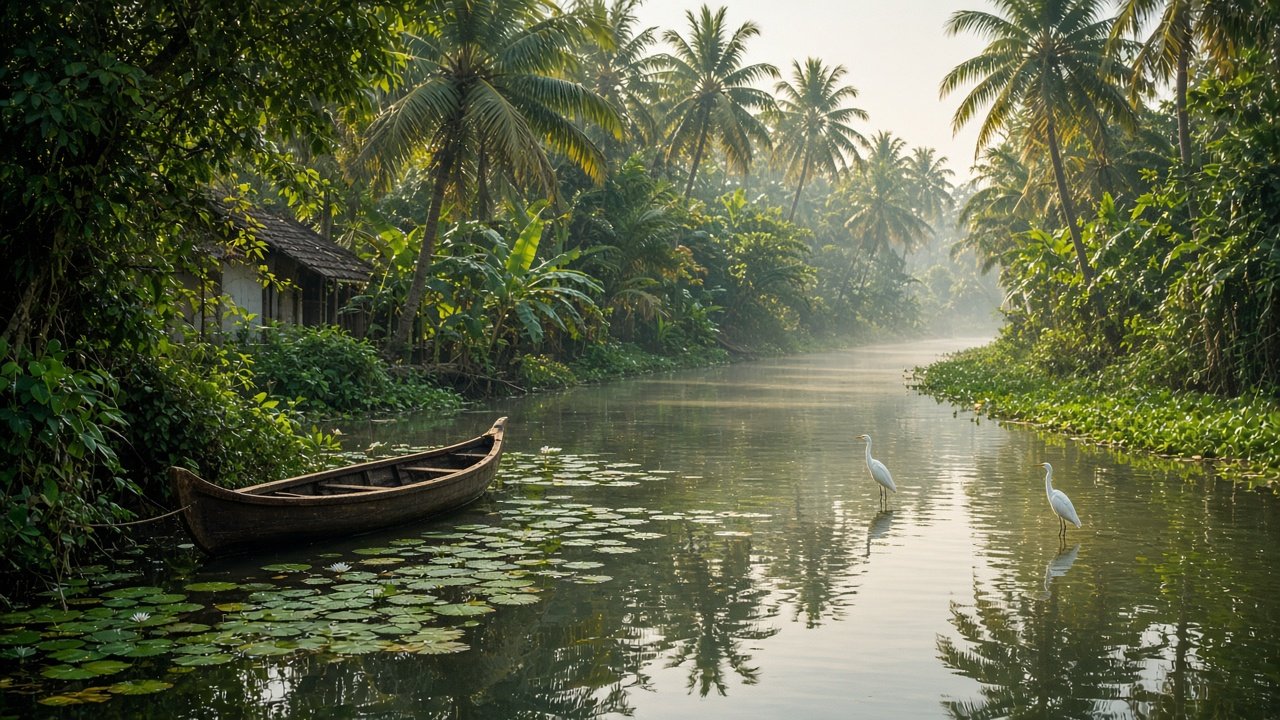
For quieter water, add a shikara or small canoe ride. These narrower boats reach village canals that larger houseboats cannot, and they are the best way to see daily life up close.
Sample 4-day itinerary from our kerala backwaters travel guide
Day 1 — Kochi arrival and Fort Kochi evening
Land in Kochi and keep the first day light. Walk Fort Kochi’s old streets, watch the Chinese fishing nets at sunset and, if you have energy, attend an evening Kathakali performance. Stay in Fort Kochi or Ernakulam.
Day 2 — Alappuzha houseboat overnight
Drive to Alappuzha in the morning and board your houseboat around noon. Lunch is usually served as you set off. Spend the afternoon on deck watching paddy fields, churches and toddy shops slide past. Anchor by evening and enjoy a quiet dinner on the water.
Day 3 — Village canals and Kumarakom
Disembark after breakfast, then take a short canoe ride into narrow canals if your boat did not cover them. Transfer to Kumarakom in the afternoon. Visit the Kumarakom Bird Sanctuary close to sunset, or simply rest at a lakeside homestay.
Day 4 — Slow morning and departure
Take an early walk or a sunrise canoe ride, when the water is still and birdlife is active. Leave for Kochi airport after lunch, or continue to Munnar for tea estates if you have extra days.
Short on time? Compress this into three days by skipping Kumarakom. Have a week? Add Munnar and Thekkady to the end of this kerala backwaters travel guide loop.
Where to stay by budget
- Budget: homestays and guesthouses in Alappuzha town and near Marari Beach; simple shared-boat options.
- Mid-range: one-night private houseboat plus a lakeside homestay or boutique stay in Kumarakom or Kuttanad.
- Premium: heritage resorts and spa properties on Vembanad Lake, often with private boats and Ayurveda programmes.
Homestays are a Kerala strength, and the best value pick in this kerala backwaters travel guide. Many hosts cook home-style meals and arrange canoe rides with local boatmen, which adds real value. Remote workers can also find long-stay options, as covered in our best workation destinations in India guide.
Food to try in the backwaters
Backwater food is built on coconut, rice, fish and spice. Try karimeen pollichathu (pearl spot fish cooked in banana leaf), appam with stew, Kerala fish curry with red rice, duck roast, and a full sadya on a banana leaf if you visit during a festival.
Vegetarians following this kerala backwaters travel guide eat well too: avial, thoran, sambar and payasam are everywhere. On a houseboat, tell the cook your spice level and dietary needs at boarding time. For more regional flavours, see our list of Indian street food destinations.
Typical costs and budgeting
Costs vary widely with season, boat category and how far ahead you book. As a rough guide, a backwaters trip ranges from budget (homestays, shared boats, buses) through mid-range (a private houseboat night and good homestays) to premium (resort stays and luxury boats).
The biggest swing factor in any kerala backwaters travel guide budget is the houseboat. Peak weeks around Christmas and New Year can cost noticeably more than the same boat in September. Ask what is included: meals, AC hours, drinking water, taxes and jetty charges.
Safety and etiquette
- Wear the life jackets provided and keep children supervised on deck; railings can be low.
- Use mosquito repellent at dusk and choose boats with nets or screened rooms.
- Dress modestly in villages and ask before photographing people or homes.
- Avoid single-use plastic; the backwaters are a fragile ecosystem.
- Agree the full price, route and timing before boarding, not at the jetty in a rush.
Every tip in this kerala backwaters travel guide applies to solo travellers too, who generally find Kerala comfortable and friendly. Our solo travel in India guide covers safe habits that work here as well.
Mistakes to avoid
- Booking a houseboat on the spot at the jetty in peak season without checking reviews or licences.
- Expecting the boat to cruise at night; boats anchor in the evening.
- Spending only one day in Alleppey and missing the quieter canals.
- Planning outdoor-heavy days in peak monsoon without buffer time.
- Ignoring Kumarakom and Kuttanad, which are calmer than the main Alleppey stretch.
For broader trip ideas across the state, browse Kerala on Incredible India. Used well, this kerala backwaters travel guide should help you choose a boat, a base and a pace that suits you.
FAQ
How many days do I need for the Kerala backwaters?
Two to three days covers a houseboat overnight and a canoe ride. Four days lets you add Kumarakom and a calm Kochi arrival, which is the pace this kerala backwaters travel guide recommends.
Is Alleppey or Kumarakom better for a houseboat?
Alleppey has the most boats and choice, so it suits first-timers. Kumarakom is quieter and better for resort stays and birdwatching. Many travellers do a houseboat from Alleppey and stay a night in Kumarakom.
Do houseboats cruise at night?
No. Houseboats generally cruise in the afternoon and anchor by early evening, then resume the next morning. Plan sunset on deck rather than a night cruise.
Is the monsoon a good time to visit?
It can be, if you like rain and lower prices. The landscape is at its greenest, but heavy showers can cut cruising time and some activities may be cancelled.
Are houseboats safe for families with children?
Yes, with sensible care. Choose an approved operator, check that life jackets are on board, and keep young children supervised on open decks.
Keep exploring with Planning for India
Ready to plan your backwaters escape? Pair this kerala backwaters travel guide with our train and street food guides, and save this page for your Kerala itinerary.