The best places to celebrate Holi in India are not all the same festival in different clothes. In the Braj region around Mathura, the days before Holi follow temple calendars and local customs such as Lathmar Holi in Barsana and Nandgaon. In Pushkar and Udaipur, the same season is often more of a public street or palace-town celebration. In a Himalayan valley such as Sangla, it can feel like a village gathering rather than a visitor spectacle.
This guide keeps the original four destinations — Pushkar, Mathura (including Barsana and Nandgaon), Udaipur, and Sangla — and adds the practical detail you need to plan: what is distinctive, what official sources actually say, how crowds and safety work, and how to check dates, because Holi follows the lunar calendar and moves each year.
Table of Contents
How to read this list, and how to check dates
Holi is a spring festival of colours, with Holika Dahan — the bonfire on the eve — followed by the playing of colours the next day. In much of North India that pair of days falls in February or March. In Braj, celebrations often begin several days earlier and are tied to specific temples and villages, not only to the main public holiday.
Do not lock a flight to a date you saw in an old blog post. Confirm the year’s calendar with a state tourism site, the district administration, or the official event listing. For the Braj circuit, the Ministry of Tourism’s Utsav portal and the Braj Teerth Vikas Parishad have described the cluster of events under names such as Rangotsav. Dates change every year.
If you want the meaning of the festival itself — the stories of Holika, Krishna and Radha, and regional variants — read that first in our longer explainer on the significance of Holi, then use this page to choose a place.

Mathura, Barsana, and Nandgaon, Uttar Pradesh
If you want the festival in the landscape of its best-known Krishna traditions, start with Braj: Mathura, Vrindavan, Barsana, and Nandgaon. Mathura is traditionally identified as Krishna’s birthplace, and the temples of the region run their own Holi observances in the days leading up to the main festival.
The event most visitors ask about is Lathmar Holi (also written Latthamar or Lath Mar Holi) in Barsana and Nandgaon. The official Uttar Pradesh NRI department festival list includes “Latthamar Holi” at Braj, Barsana, and Nandgaon. Incredible India, the Ministry of Tourism site, describes Barsana as Radha’s town, about 40 kilometres from Mathura, and sets out the custom clearly.
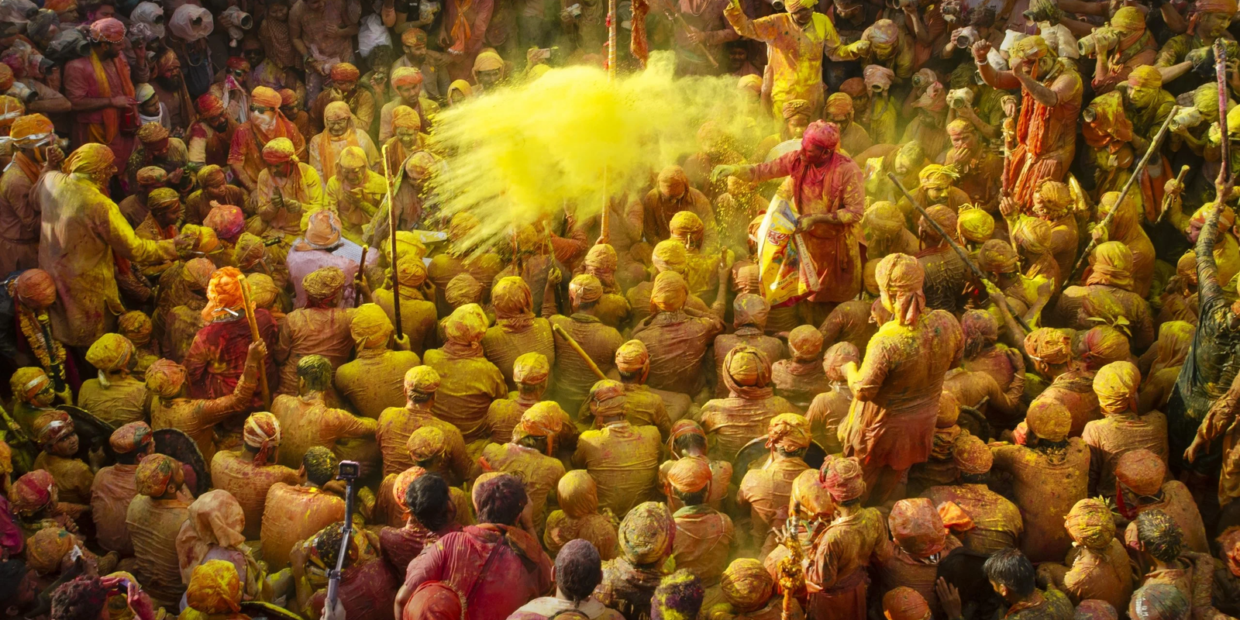
According to that official description, Lathmar Holi is usually celebrated in February or March. Women playfully wield bamboo sticks, and men from the other village try to shield themselves, in a re-enactment of Krishna’s teasing of Radha and her friends. The celebration is described as spanning two days: villagers of Nandgaon, associated with Krishna, come to Barsana and the Radha Rani temple on the first day; the next day, women of Barsana go to Nandgaon.
The Mathura district administration has also described the gathering at the Radha Rani temple, the singing of Holi songs in Braj Bhasha, and the fact that these events take place in the days before the main Holi. Other local forms in the same region include Chhadimar Holi in Gokul and Huranga in Baldev. You do not need to attend every one of them. For a first visit, one well-paced day in Barsana or Nandgaon, plus a quieter temple visit in Mathura or Vrindavan, is enough.

Plan this trip as a crowd event. Narrow lanes, temple courtyards, and the playful use of sticks mean you should keep a safe distance if you are not taking part, protect cameras, and agree on a meeting point if your group is separated. Travel from Mathura or from a stay in Vrindavan rather than assuming you can drive in at the last minute and park next to the temple. Check the year’s traffic and security plan from the district administration when it is published.
Mathura sits close enough to Agra that some travellers fold Braj Holi into a wider North India route. If that is your plan, leave slack in the schedule; festival days are a poor time to rush a same-day Taj Mahal slot. A calmer Delhi–Agra–Jaipur shape, such as our seven-day Golden Triangle itinerary, can work if Holi is a day or two inside a longer trip rather than the only reason you are on the road.
Pushkar, Rajasthan

Pushkar is a small temple town around a sacred lake, and in Holi week it draws a mix of residents, domestic pilgrims, and foreign visitors. The celebration here is often described as more open and street-based than a single temple ritual: colour is played in public spaces, and music and dancing spill into the lanes around the ghats.
That openness is the appeal, and also the reason to be careful. A compact town fills quickly. If you are uncomfortable with strangers applying colour, or with very loud street gatherings, Pushkar at midday on the main day may not be the right pitch. Early morning at the lake, or watching from a rooftop café you have already booked, can be a calmer way to take part.
Stay inside the town if you can, book well ahead, and keep a change of clothes and a sealed bag for phones. Pushkar has a religious core as well as a visitor scene; dress modestly around the temples and the ghats, and follow any local notice that restricts colour, alcohol, or entry in particular precincts. Confirm festival dates and any municipal advisories closer to the time through Rajasthan tourism or the local administration, not only through hotel posters.
Udaipur, Rajasthan

Udaipur offers a city-scale Holi: palaces and lakes as a backdrop, neighbourhood gatherings, and, in some years, ticketed or hosted events in and around historic precincts. Older visitor accounts often mention Holika Dahan associated with the City Palace, and colour being played near the Jagdish Temple the following morning. Treat those as possibilities to verify, not as a standing public invitation.
Palace, hotel, and restaurant events in Udaipur can be ticketed, dress-coded, and limited in number. If a “royal Holi dinner” is what you want, book it directly with the venue and read what is included. If you want a local street Holi, you may not need a ticket at all — but you will still need a plan for crowds in the old city, colour stains on rented clothes, and a way back to your hotel when taxis are scarce.
Udaipur is also a gentler base than Braj if you are travelling with people who want the festival without the intensity of Lathmar Holi. Combine one colour morning with ordinary sightseeing on the other days, and keep water, hats, and a clean-up hour in the itinerary. Check Rajasthan tourism and the venue’s own notice for the year’s public events rather than copying a previous year’s programme.
Sangla, Himachal Pradesh

Sangla, in the Kinnaur district of Himachal Pradesh, is the quiet end of this list. It is a mountain valley town, not a national tourist stage for Holi, and that is the point. Visitors who have spent the festival there describe village gatherings, music and dancing, shared meals, and prayers to the local deity, sometimes spread across more than a single day.
Because this is a small community festival, behave as a guest. Ask before you photograph people, do not treat the village as a colour park, and follow what local hosts are actually doing. Facilities are limited compared with Udaipur or Mathura. In late winter the road into Kinnaur can be slow or disrupted by weather, so check the Himachal Pradesh tourism and public works updates, and do not force a tight connection through a high pass.
If Sangla feels too remote, or the road is unreliable that week, consider celebrating closer to your main route instead of adding a long mountain transfer only for one festival morning.
Practical planning: colours, crowds, and courtesy
Wherever you go, a few habits make the day safer and more comfortable:
- Use officially sold or plant-based colours when you can, and keep colour away from eyes, open cuts, and contact lenses.
- Ask before putting colour on someone, especially strangers and children.
- Leave documents and expensive equipment in the hotel safe; carry a small amount of money in a sealed pouch.
- Wear clothes you can discard or wash roughly, and shoes you do not mind staining.
- Agree on a no-alcohol plan if you are in a crowded temple town. Many religious precincts restrict it anyway.
- If you are travelling as a woman or in a small group, stay with people you trust in the densest crowds, and leave if the mood turns rough.
Holi also sits close to other spring observances in some regions. If you are building a longer festival trip, our note on Vasant Panchami explains a different, earlier spring day that is not a colour festival in the same way.
FAQ: Best places to celebrate Holi in India
Which place is best for a first-time visitor?
It depends on the experience you want. Choose Barsana or Nandgaon for the traditional Lathmar Holi of Braj, Pushkar or Udaipur for a more visitor-facing town celebration, and Sangla only if you are already heading into Kinnaur and can travel as a guest in a small village.
When is Lathmar Holi, and is it on the same day as Holi?
Lathmar Holi in Barsana and Nandgaon is held in the days before the main Holi holiday, on dates that follow the local lunar calendar. Confirm the year’s dates through official Uttar Pradesh, district, or tourism announcements.
Is Holi safe for foreign tourists?
Many visitors take part every year, especially in well-known towns. Crowds, colour, and the playful use of sticks in Braj can still be intense. Go with a clear meeting plan, modest clothing you can spoil, and a willingness to step back from the densest courtyard.
Do I need tickets?
Street and temple Holi are generally not ticketed, though access and security rules can apply. Palace, hotel, or special venue events, especially in a city such as Udaipur, may require tickets booked with the venue.
How do I confirm dates for next year?
Use official tourism or district pages for that year, and, for Braj, watch for the Rangotsav or Lathmar Holi notices from the local administration or the Braj Teerth Vikas Parishad. Do not reuse dates from an old article, including this one if you are reading it in a later year.
Pick one place that matches your comfort with crowds, book a stay you can walk back to, and confirm the calendar from an official source. That is enough to enjoy Holi in India without treating the festival as a race through four towns in four days.