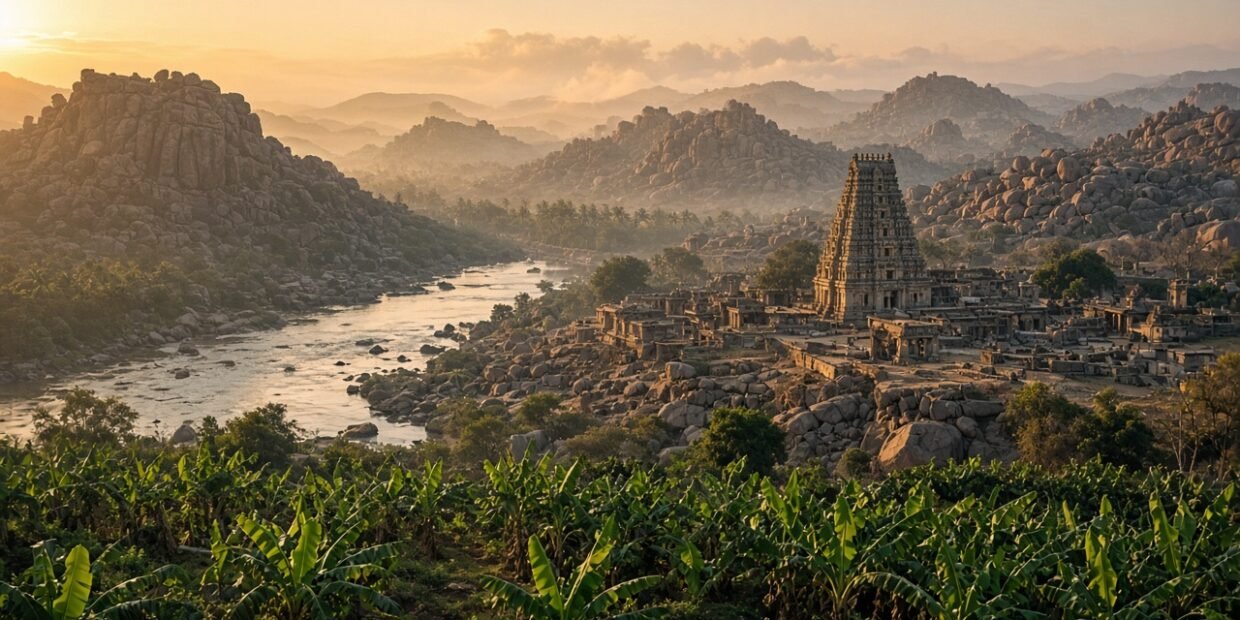
This hampi travel guide is for travellers who love history, landscapes and slow exploration. Hampi, in central Karnataka, was once the capital of the Vijayanagara Empire. Today its temples, bazaars and royal enclosures lie scattered across a surreal landscape of giant granite boulders and banana fields along the Tungabhadra river.
Below you will find the best time to visit, how to reach, how to get around, a three-day plan, stays by budget, food, costs, etiquette and the mistakes that make Hampi feel exhausting rather than magical.
Table of Contents
Why Hampi is special
The Group of Monuments at Hampi is a UNESCO World Heritage Site. At its height in the 15th and 16th centuries, Vijayanagara was one of the largest and richest cities in the world. After its defeat in 1565, the city was abandoned, leaving behind hundreds of monuments.
The site is huge, so a good hampi travel guide splits it into zones: the Sacred Centre around Virupaksha Temple and Hampi Bazaar, the Royal Centre with palaces and the Lotus Mahal, and the river areas around Vittala Temple and Anegundi on the northern bank.
Best time to visit Hampi
October to February is the best time, with comfortable days for walking and cycling. Mornings and late afternoons are ideal for exploring and photography.
March to May is very hot, making midday sightseeing difficult. The monsoon (roughly June to September) brings greenery and full rivers, but coracle rides and river crossings may be suspended when water levels rise. The Hampi Utsav cultural festival is usually held in winter; check dates with Karnataka Tourism.
How to reach Hampi
By rail
The nearest major railway station is Hosapete (Hospet) Junction, about 13 km from Hampi. Trains connect it with Bengaluru, Hubballi and Goa. Overnight trains from Bengaluru are popular; our guide to Indian trains explains classes and bookings.
By air
The closest airport is Jindal Vijayanagar Airport near Toranagallu, with limited flights. Hubballi and Bengaluru airports offer more connections, followed by a road or rail transfer.
By road
Buses run from Bengaluru, Hubballi and Goa to Hosapete, from where local buses and autos go to Hampi. A private car is convenient if you are combining Hampi with Badami and Pattadakal.
Getting around the ruins
Hampi is best explored by a mix of bicycle, auto-rickshaw and walking. Bicycles suit cooler mornings; autos with a driver-guide are better for covering the Royal Centre and Vittala in one day. At Vittala, battery vehicles may run the last stretch to the temple.
The northern bank (Anegundi and the Sanapur side) is reached by crossing the river. Ferry services depend on water levels and local rules, so confirm before planning a crossing.
Top sights in this hampi travel guide
- Virupaksha Temple: a living temple that is still in worship, with a towering gopuram.
- Vittala Temple: famous for the stone chariot and the musical pillars of its mandapa.
- Hemakuta Hill: small temples and wide views, lovely at sunset.
- Matanga Hill: one of the best sunrise viewpoints, but go with company.
- Royal Centre: the Lotus Mahal, Elephant Stables, Queen’s Bath and Mahanavami Dibba.
- Achyutaraya Temple and Hampi Bazaar: long colonnaded streets that hint at the city’s scale.
Many monuments are protected by the Archaeological Survey of India, and some sites need a ticket. Check timings and closures before you set off.
Sample 3-day hampi travel guide itinerary
Day 1 — Sacred Centre and sunset
Arrive in Hosapete and transfer to Hampi. Visit Virupaksha Temple and walk Hampi Bazaar. End with sunset on Hemakuta Hill.
Day 2 — Royal Centre and Vittala
Start early at the Royal Centre with the Lotus Mahal, Elephant Stables and Queen’s Bath. In the afternoon, head to Vittala Temple and its stone chariot, then walk the riverside path back if your energy allows.
Day 3 — River and northern bank
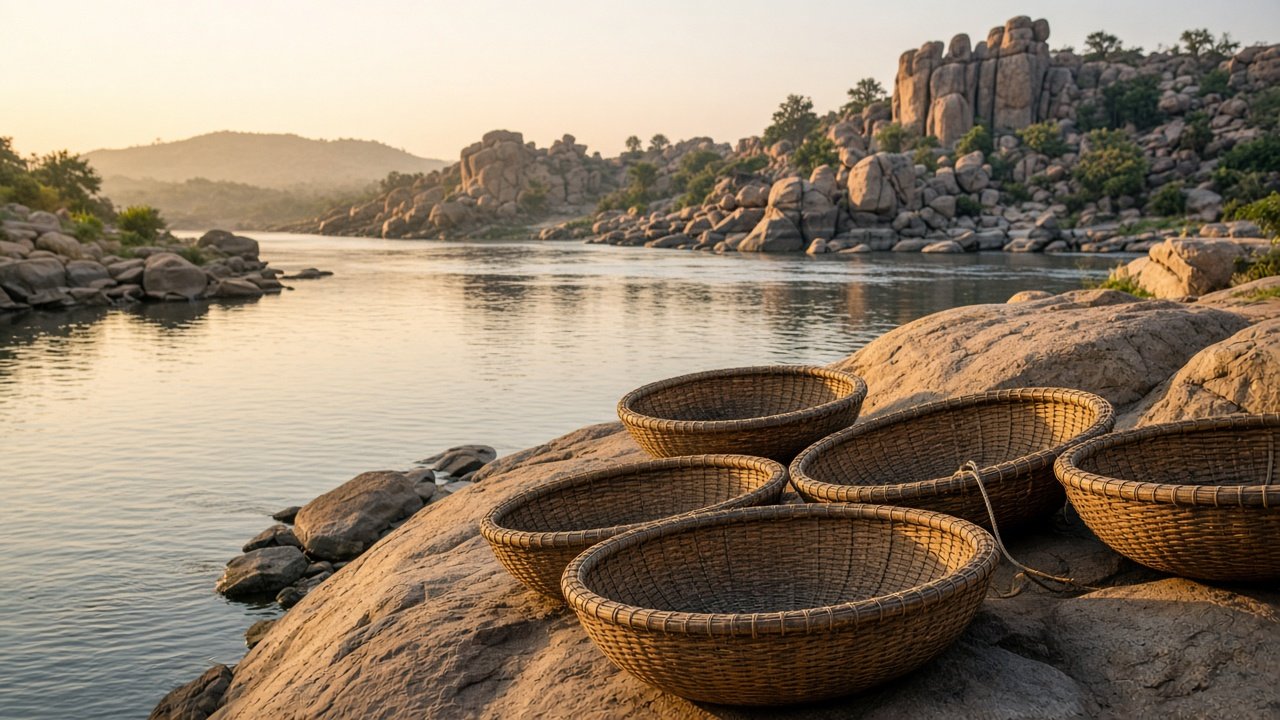
Take a coracle ride on the Tungabhadra, if running, then explore Anegundi village, the Anjanadri Hill temple and the quieter northern bank. Rest in the afternoon and leave in the evening.
With more time, add Badami, Aihole and Pattadakal, or the Daroji bear sanctuary. Combine this hampi travel guide with a Goa or Bengaluru leg for a longer South India loop.
Extending to Badami, Aihole and Pattadakal
Badami, Aihole and Pattadakal lie a few hours northwest of Hampi and show the earlier Chalukyan style of temple architecture. Pattadakal is itself a UNESCO World Heritage Site. Most travellers base themselves in Badami for one or two nights and see all three by car.
The Incredible India Hampi page is useful for seasonal tips when you plan this extension. Any hampi travel guide route gains depth when you add these older temples.
Where to stay by budget
- Budget: simple guesthouses in Hampi village and on the northern bank.
- Mid-range: boutique stays and homestays around Kamalapur and Anegundi.
- Premium: heritage-style resorts near Hosapete and Kamalapur.
Regulations around Hampi’s heritage zone have affected guesthouses in the past, so check recent reviews and confirm your booking directly before arrival.
Food to try in Hampi
Local Karnataka food is simple and good. Try a North Karnataka thali with jolada rotti (jowar flatbread), ennegai (stuffed brinjal), and spicy chutneys. Breakfasts of idli, dosa and upma are everywhere, and banana pancakes and filter coffee are traveller favourites.
Hampi is a temple town, so many places are vegetarian and alcohol is limited. For more regional flavours, see our Indian street food destinations guide.
Costs and budgeting
Costs in this hampi travel guide vary with season and stay type. Hampi is generally one of the more affordable heritage destinations in India. Your main costs are accommodation, an auto or bicycle for each day, monument tickets and a guide if you want one. Ticket rates differ for Indian and foreign visitors, so check current ASI notices.
Safety and etiquette
- Avoid climbing unstable ruins or boulders; respect barriers.
- Do not visit remote hills like Matanga alone at sunrise or after dark.
- Dress modestly and remove shoes at Virupaksha and other temples.
- Carry water, a hat and sunscreen; there is little shade in the ruins.
- Do not swim in the river; currents and rocks are dangerous.
Solo travellers can find more tips in our solo travel guide for India, all of which fit well with this hampi travel guide.
Mistakes to avoid
- Trying to see Hampi in a day; you need at least two full days.
- Exploring at midday in the hot season.
- Missing sunrise or sunset from the hills.
- Assuming river crossings always run; they depend on water levels.
- Skipping a guide at Vittala and the Royal Centre, where context really helps.
With these tips, this hampi travel guide should help you enjoy one of India’s most extraordinary landscapes.
FAQ
How many days are enough for Hampi?
Two to three days is ideal. That covers the Sacred Centre, Royal Centre, Vittala and the northern bank without rushing, as this hampi travel guide recommends.
What is the nearest railway station to Hampi?
Hosapete (Hospet) Junction, about 13 km away, is the nearest major station, with trains from Bengaluru, Hubballi and Goa.
Is Hampi a UNESCO World Heritage Site?
Yes. The Group of Monuments at Hampi is listed by UNESCO for its Vijayanagara-era temples, palaces and urban remains.
When is the best time to visit Hampi?
October to February offers the most comfortable weather. March to May is very hot, and the monsoon can stop river crossings.
Can I do coracle rides in Hampi?
Yes, coracle rides operate on the Tungabhadra in suitable conditions, but they may be suspended when water levels are high.
Keep exploring with Planning for India
Save this hampi travel guide, and explore our train and solo travel guides to plan your next South India trip with Planning for India.