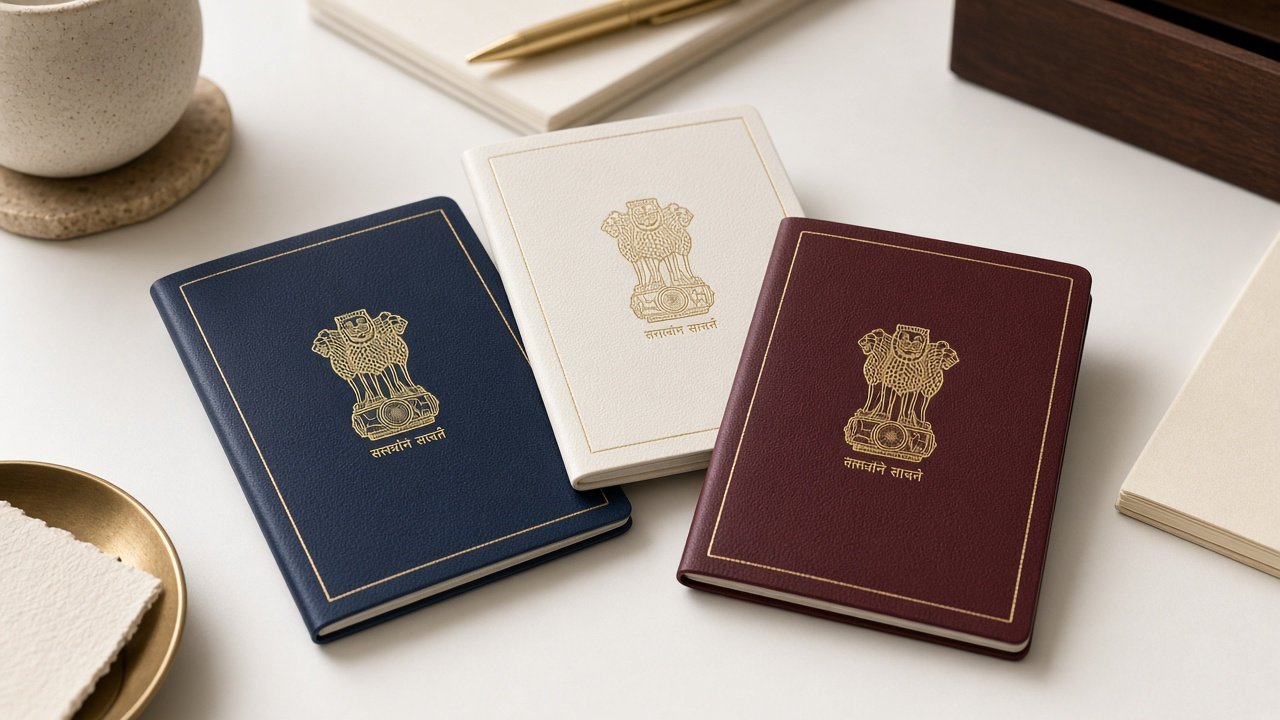


Most Indian citizens only ever hold one navy booklet—but the different types of passports in India still matter every time you fill a form, book a flight, or help a relative apply. Colour, eligibility, and endorsements are not interchangeable, and mixing them up wastes appointments.
This guide explains the different types of passports in India in plain language: ordinary, official, and diplomatic passports; how ECR/ECNR notes appear; tatkal versus normal timelines; and how to identify what you are looking at without relying on airport myths.
Start with official sources
Process steps, fees, and document checklists change. Always verify on Passport Seva and policy pages from the Ministry of External Affairs. Use this article to understand categories; use those portals to execute. When people argue about the different types of passports in India, the portal wins.
Ordinary passport (navy / deep blue)
What it is
The ordinary passport is the standard travel document for private citizens—tourism, study abroad, business trips, medical travel, and family visits. If you are comparing the different types of passports in India as a typical applicant, this is almost always your category. Adult booklets are commonly valid for up to ten years; many minors receive shorter validity.
Who uses it
Students, tourists, private-sector employees, freelancers, and families. Embassies and airlines treat it as the default Indian passport unless another type is presented with matching entitlement.
How to identify
Look for the navy/deep-blue cover with the Ashoka Lion Capital embossing, the word “Passport / पासपोर्ट”, and biodata that lists the passport type as ordinary (or equivalent wording in the machine-readable / observations area). Colour is a strong hint; the printed type and issuing authority text are definitive.
Practical tips
- Match the name spelling to Aadhaar, PAN, and tickets before you apply.
- Book the Passport Seva appointment early in peak seasons (summer and festival windows).
- Keep soft copies of the biodata page encrypted and shared with a trusted contact.
- For mobility context after you hold one of the different types of passports in India, see our Henley Passport Index and India travel access overview.
Official passport (white)
What it is
Official passports (often described as white-covered) are issued for entitled government servants and other authorised categories travelling on official duty. Among the different types of passports in India, this is not a “premium tourist upgrade”—it is a duty document.
Who uses it
Eligible government officials when rules authorise official travel. Private holidays generally require the ordinary passport even if someone also holds or previously held an official booklet under service rules.
Differences vs ordinary
Purpose of travel, eligibility rules, and administrative sponsorship differ. Using an official passport for unauthorised private travel can invite disciplinary and legal trouble. Colour helps identification; entitlement letters and MEA/department processes govern issuance.
Practical tips
- Confirm with your department’s authorised passport cell before assuming eligibility.
- Keep ordinary-passport validity intact if you also need personal travel flexibility.
- Never treat white covers as status symbols at immigration—officers check purpose and papers.
Diplomatic passport (maroon)
What it is
Diplomatic passports (commonly maroon) are for diplomats and other categories entitled under government rules. In any honest list of the different types of passports in India, diplomatic issuance is the narrowest lane.
Who uses it
Diplomats and similarly entitled persons as defined by MEA rules—not influencers, not frequent flyers, and not anyone who simply “wants faster immigration.”
How to identify
Maroon cover plus biodata/type markings that identify the document as diplomatic. Privileges attach to role and accreditation, not to colour alone. Spoof stories about buying diplomatic colours are scams.
ECR and ECNR: notes that travel with ordinary passports
Emigration Check Required (ECR) and Emigration Check Not Required (ECNR) status appear in connection with ordinary passports for certain travellers, especially in contexts involving emigration clearances for work abroad. These are not separate booklet colours among the different types of passports in India; they are endorsements/status rules that affect clearance for some destinations and employment journeys.
Why it matters
If your booklet carries ECR-related observations, verify current emigration requirements before accepting overseas job offers. ECNR status generally eases those specific checks. Always reconfirm with Passport Seva / Protector of Emigrants guidance—thresholds and educational criteria have evolved over years.
Practical tip
Do not confuse ECR stickers with passport “types.” You still hold an ordinary passport; the note changes compliance steps for particular travel purposes.
Tatkal vs normal applications
Tatkal is a faster processing track for eligible ordinary (and other eligible) applications with higher fees and tighter documentation scrutiny—not a different passport colour and not a shortcut around police verification where required. When families research the different types of passports in India, they often really need timeline advice:
- Normal: Standard fees and timelines; plan weeks to months depending on verification and RPO load.
- Tatkal: Accelerated where rules allow; incomplete files get rejected quickly.
- Fresh vs re-issue: Lost, damaged, exhausted pages, or expiring booklets follow re-issue flows—start early before non-refundable tickets.
Name changes, address changes, and minor applications add document layers. Children’s passports usually need additional consent paperwork and often shorter validity.
Documents people confuse with passports
- Emergency Certificates issued by missions for distressed returns—not full passports.
- Identity certificates / special travel documents in rare cases.
- OCI cards and visas—powerful, but they are not substitutes for an Indian passport.
- Driving licences—useful on the road; see Indian driving licence for international travel.
Side-by-side: how to tell them apart quickly
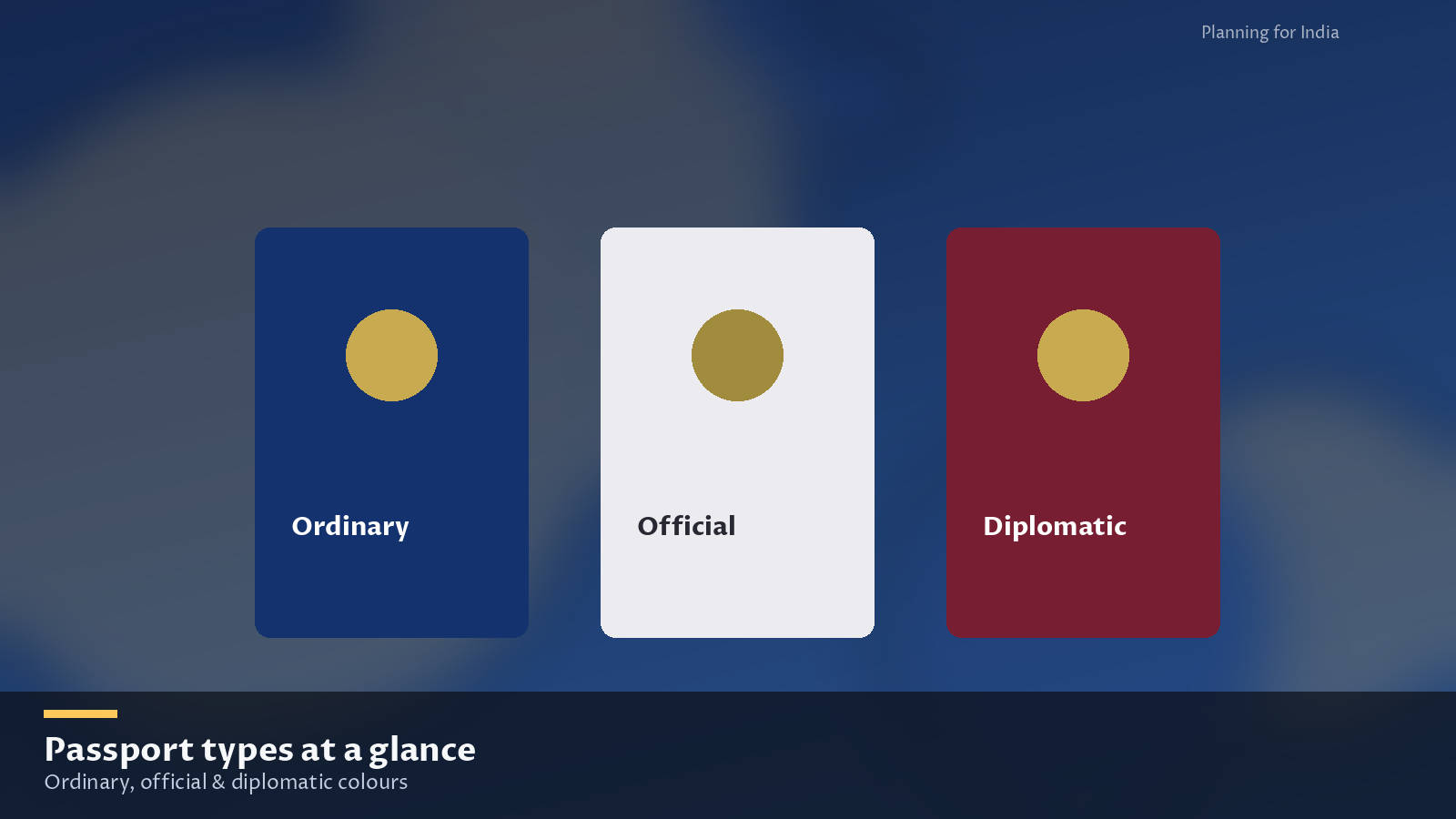
- Ordinary: Navy/deep blue; private travel; widest public use.
- Official: White; government duty entitlement.
- Diplomatic: Maroon; diplomatic/entitled categories only.
- ECR/ECNR: Status/notes on ordinary passports—not separate colours.
Memorising that grid covers most real-world confusion about the different types of passports in India at counters and family WhatsApp groups.
Renewals, loss abroad, and six-month airline rules
Many airlines and embassies expect six months of validity beyond your return date. Renew before you lock non-refundable fares. If a passport is lost abroad, contact the nearest Indian mission, file a local police report, and keep scans ready for emergency documentation.
Respond quickly to police verification calls during re-issue. Silence slows ordinary renewals even when you already understand the different types of passports in India by colour.
FAQ: Different types of passports in India
Can I request a diplomatic passport for faster immigration?
No. Diplomatic and official categories follow entitlement rules, not preference or ticket class.
Do colours alone define the type?
Colours are strong visual cues, but biodata and endorsements define the document among the different types of passports in India. Always read the printed type.
Is tatkal a separate passport type?
No. Tatkal is a processing mode with different fees and scrutiny, not a fourth booklet colour.
What should I do if my booklet is damaged?
Apply for re-issue. Do not travel on compromised biodata or photo pages.
Do minors get a different coloured passport?
Minors typically receive ordinary passports with shorter validity and extra consent paperwork—not a separate colour category.
Apply early, scan everything, and know your category before you book. Clear knowledge of the different types of passports in India prevents wrong-form days and airport surprises.