


From white private plates to green EV markers, vehicle number plates in India encode ownership class, fuel category, and sometimes temporary status. Learn the colours before you rent, buy, or decode traffic like a local.
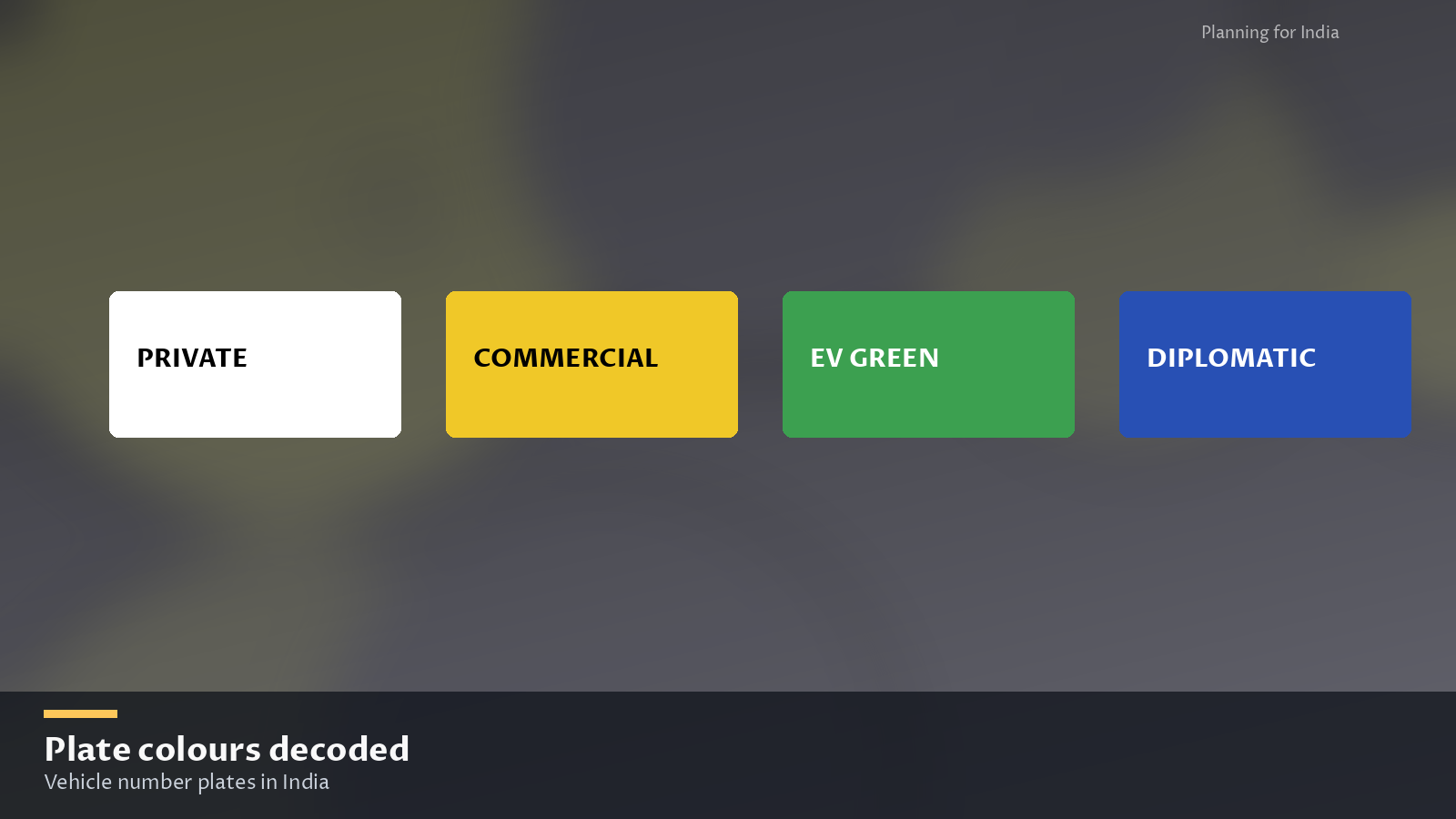
Colour coding makes vehicle number plates in India readable at a glance—commercial versus private, electric versus combustion, diplomatic versus civilian, and BH-series portability versus classic state codes.
Where the rules live
Registration systems run through Parivahan Sewa, with policy stewardship involving the Ministry of Road Transport and Highways. When parking-lot folklore contradicts those sources, trust the portals. Specs for High Security Registration Plates (HSRP) and colour schemes are notified—and occasionally updated—so treat this as a living map of vehicle number plates in India.
White background, black letters — private vehicles
Meaning
White plates with black characters are the default for privately owned cars and two-wheelers. Self-drive rentals almost always show this style of vehicle number plates in India.
Who uses them
Households, private company cars registered as non-commercial, and most personal two-wheelers.
Practical tips
- Match the plate to the Registration Certificate (RC) before accepting a rental.
- Obscured or stylised fonts can attract challans—HSRP standards exist for a reason.
- Photograph plate + RC at rental pickup and return.
Black background, white letters — historically private (older scheme)
Older private-vehicle schemes in India used black plates with white lettering. You may still spot survivors during transitions, but modern private vehicle number plates in India are widely standardised on white-with-black. Do not assume a black plate is “VIP”—verify the RC.
Yellow background, black letters — commercial
Meaning
Yellow plates signal commercial use: taxis, many buses, goods carriers, and other vehicles registered for hire or reward.
Who uses them
Cab operators, transporters, stage carriages, and logistics fleets. If you are paying a commercial fare, yellow is a common companion among vehicle plates.
Differences vs private
Insurance, permits, and fitness rules often differ. Drivers should carry commercial documentation; travellers can sanity-check that the vehicle looks properly plated for hire.
Green plates — electric vehicles (EVs)
Meaning
Green number plates flag electric vehicles as EV adoption grows across Indian cities. Exact letter/background combinations follow government notifications—recheck Parivahan when you buy. Among contemporary vehicle number plates in India, green is the quickest “this is an EV” cue for parking and policy conversations.
Who uses them
Private and commercial EVs that qualify under the notified scheme—cars, two-wheelers, and other categories as specified.
Practical tips
- Confirm dealer paperwork shows the correct EV plate category before delivery.
- Do not DIY-paint a plate green to “look electric”—illegal and unsafe.
- Charging-access policies and some city incentives reference EV registration status.
Blue plates — diplomatic / UN / mission vehicles
Meaning
Blue plates are associated with accredited diplomatic missions and related protocol categories. They are not available to private citizens.
Who uses them
Embassy and mission vehicles operating under protocol rules. Seeing blue plates in Delhi or other capitals is normal near chancery districts.
Tip
Curiosity is fine; impersonation is not. Blue is one of the most restricted lanes in vehicle number plates in India.
Red / temporary plates and trade plates
Temporary red
Temporary plates (often red-linked in public description) appear around vehicle purchase or transit before permanent registration. Validity windows are strict—driving indefinitely on temporary marks invites penalties.
Trade plates
Dealers and manufacturers use trade plates under controlled conditions for testing, movement, and display—not as a permanent personal registration hack.
Practical tips
- If buying used, confirm permanent registration is clean and plates match the RC.
- Never buy “temporary forever” stories from informal sellers.
BH series — Bharat series portable registration
Meaning
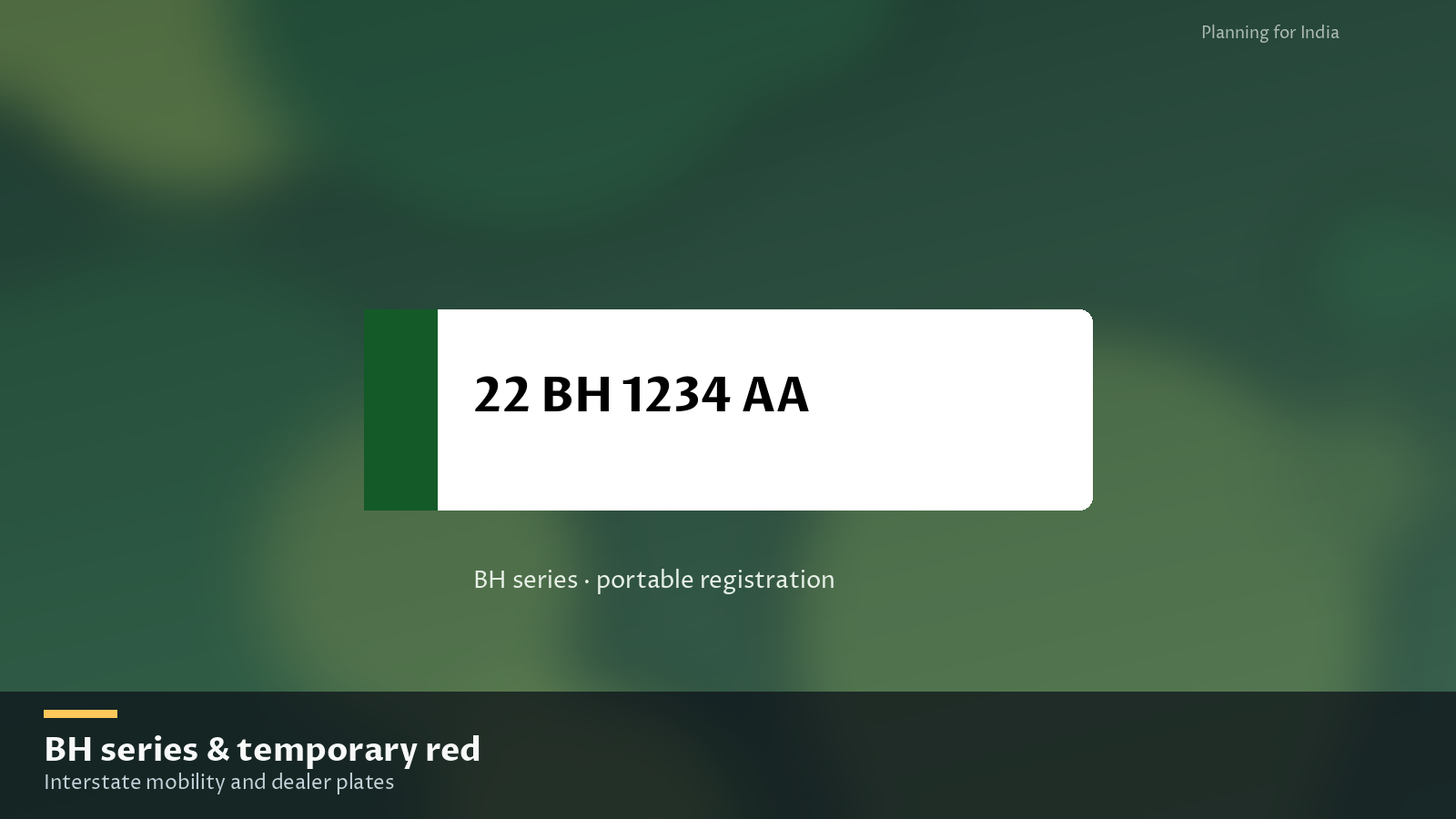
The BH (Bharat) series is a registration format designed to ease interstate moves for eligible vehicle owners, sitting alongside classic state codes in the modern vocabulary of vehicle number plates in India.
Who uses them
Eligible categories defined in notifications—often linked to people who relocate across states for work. Confirm current eligibility rather than assuming every buyer qualifies.
How to identify
Look for the BH marker in the alphanumeric string (for example patterns like YY BH #### XX). Green EV rules and BH format can intersect depending on vehicle type—read the RC.
Practical tips
- BH does not erase the need for valid insurance, PUC where applicable, and HSRP compliance.
- Never purchase “fancy number” services that bypass legal auctions or RTO processes.
Military and other specialised marks
Defence and certain specialised fleets use distinct marking practices outside the ordinary civilian colour story. Treat them as restricted categories: do not copy formats, and do not assume civilian RTOs issue lookalikes.
Reading the alphanumeric pattern
- State/UT code (MH, DL, KA, TN…)
- RTO / series numeric code
- Series letters + unique digits
- BH-series portable format where applicable
Keep RC, insurance, and pollution documents with the vehicle. Cross-border drivers should review Indian driving licence for international travel. Passport-level mobility context: Henley Passport Index and India travel access. Fluency in vehicle number plates in India is practical consumer protection.
Renting, buying, and transferring
Before accepting a rental, match plate to RC and insurance. For purchase or sale, transfer of ownership requires RTO/Parivahan steps—a handshake does not finish the job. Verify hypothecation banks, unpaid challans, and insurance validity.
Fleet managers should train staff to spot mismatched fonts and expired temporary plates. Operational safety improves when teams truly read vehicle number plates in India rather than glance at chrome.
White-on-black vs black-on-white: a quick history note
Older private vehicles often showed black backgrounds with white letters. Newer standards shifted private cars toward white backgrounds with black letters, while commercial stayed on yellow. When you still spot a black private plate, treat it as a legacy scheme and verify the RC rather than assuming special status. Understanding both eras helps you read vehicle number plates in India without confusing vintage paint for a privileged category.
How commercial yellow differs in daily practice
Permits and fitness
Commercial operators typically juggle fitness certificates, route permits, and different insurance products. Travellers do not need to memorise every form, but a yellow plate is a reminder that the vehicle is in the hire-or-reward world. If a “private” airport pickup arrives on yellow plates, that can be normal for taxis—just confirm the booking matches the car.
Goods vs passenger commercial
Not every yellow plate is a taxi. Trucks and delivery vans share the commercial colour story with different body types. Reading vehicle number plates in India alongside the vehicle class painted on the body prevents wrong assumptions at warehouses and hill checkpoints.
EV green plates: charging, resale, and city rules
As cities expand EV parking and charging incentives, green plates become a fast visual filter for enforcement and facility access. On resale, buyers increasingly ask for proof that the plate category matches the motor and battery paperwork. Dealers should deliver HSRP-compliant green plates rather than temporary marks that linger. For fleet electrification, standardize a checklist: RC category, insurance endorsement, and charger access cards.
If your state pilots special EV series formats, reconfirm on Parivahan before you travel interstate for long stretches. Colour is national signalling; series codes still carry state/RTO DNA unless you are on BH.
Temporary red marks: countdown discipline
Temporary registration exists so a bought vehicle can move legally before permanent plates arrive. The risk is treating temporary marks as open-ended. Set calendar reminders for expiry, keep dealer invoices handy at checkpoints, and refuse to take delivery if the temporary document looks altered. Among practical skills for reading vehicle number plates in India, spotting an overdue temporary plate protects you as a buyer and as a road user.
Military and specialised fleets: look, don’t copy
Defence vehicles and some specialised government fleets use marking systems outside civilian RTO colours. Civilians should not imitate fonts, codes, or colour blocks. If you work near cantonment areas, expect different stop-and-check norms. Curiosity about formats is fine; fabricating lookalike plates is a serious offence.
FAQ: Vehicle number plates in India
Are stylised fonts legal?
No. Use prescribed HSRP / standard fonts and spacing where required.
I moved states—can I keep old plates forever?
Permanent relocation usually triggers re-registration rules; BH series helps some portability cases when you qualify.
Damaged plate—what now?
Replace via RTO/Parivahan processes. Never obscure characters with tape or stickers.
Do green plates mean I can skip registration rules?
No. EV plates still require valid registration, insurance, and compliance—colour only signals vehicle category.
Are blue plates available if I pay extra?
No. Diplomatic/mission plates are entitlement-based, not purchasable upgrades among vehicle number plates in India.
Once you learn vehicle number plates in India, traffic becomes a readable story of status, fuel type, and paperwork—not just horns and stickers.